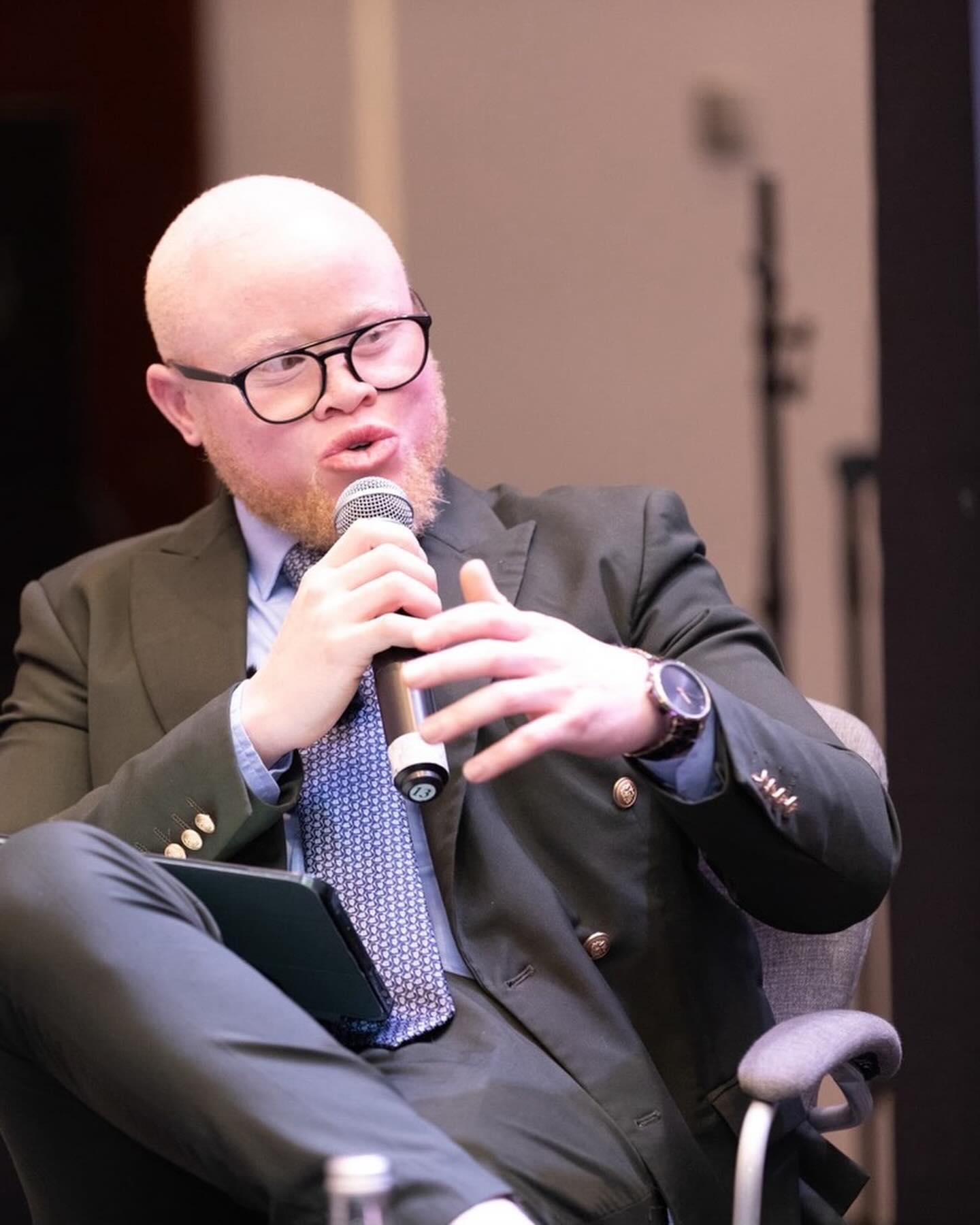
I have been sitting with this question for a while. And as I tend to do, I am going to use myself to drive it home. Most persons with disabilities I know started in the same place — as beneficiaries. Recipients of programmes, invitees to workshops. Some have since moved on beautifully. Into NGO roles, management positions, country director titles, global platforms. And the people who first invited us into those rooms? Many of them have climbed their own ladders too. That is how careers work. That is how time works.
But we did not all take the same road
I chose journalism. I started an OPD. I built a career on my own terms, outside the conventional pathway of the disability movement where the typical trajectory runs from beneficiary, to OPD employee, to movement leader, to — if you are lucky — a seat at one of the big INGOs. That is a legitimate road. It has taken many people somewhere meaningful. But it is not the only road.
And here is where the question begins to bite. For those of us who took a different path, who built professional skills, professional reputations, and professional track records outside of that conventional lane — when do we stop being seen as beneficiaries? When does the room look at us and see a professional?
Because I will tell you what still happens
I get invited to dispense professional skills and professional expertise, and the budget conversation tells me everything I need to know about how I am actually being seen. Not long ago someone reached out — someone who has known me and my work for years — and the organisation they were representing had no budget for the role they were asking me to fill. No budget. For work that carries a market value. For work that someone without a disability would have been compensated for without a second thought. I did not condone it. I named my value clearly. And because of who was asking, I found a middle ground. But I should not have had to.
“As an MC, I have been in rooms where the going rate for someone without a disability doing the same job was a thousand dollars. The figure floated to me? Two hundred. And this was not from an organisation hostile to disability inclusion. This was from within the ecosystem that claims to champion economic empowerment and independent living for persons with disabilities.”
So I ask plainly
If you believe in my economic empowerment, why are you the one undermining it? I know the counter-arguments. Perhaps I have not invested enough in my craft. Perhaps the role was not given to me as a professional engagement at all — perhaps it was a DEI appointment dressed up as an opportunity, which is its own kind of insult. These are questions I hold honestly, because self-reflection is part of this. But I also know a brother — a person with a disability, gifted, meticulous — who produced a document for an organisation that had quoted a significant budget for that exact deliverable. What they paid him was a fraction of what the work was worth. He delivered to market standard. And still, when it came to what he was paid, a different standard applied.
When does that change?
I am not closing this with a solution. This is a reflective piece and it deserves to remain open. But I am issuing a specific call to every person with a disability who chose not to climb the conventional ladder, who built something on their own terms, who shows up as a professional and is still being received as a beneficiary: you are not imagining it.
And to the organisations, the allies, the movement insiders who know exactly who they are as they read this — the question is yours to sit with too. When will a person with a disability stop being looked at as a beneficiary and be looked at as a professional? Or is the better question not when but how — and what will it actually take to make that a reality? As always, I am grateful you are here and I am glad you are thinking with me.
Leave a comment