
 Open the Include360 app
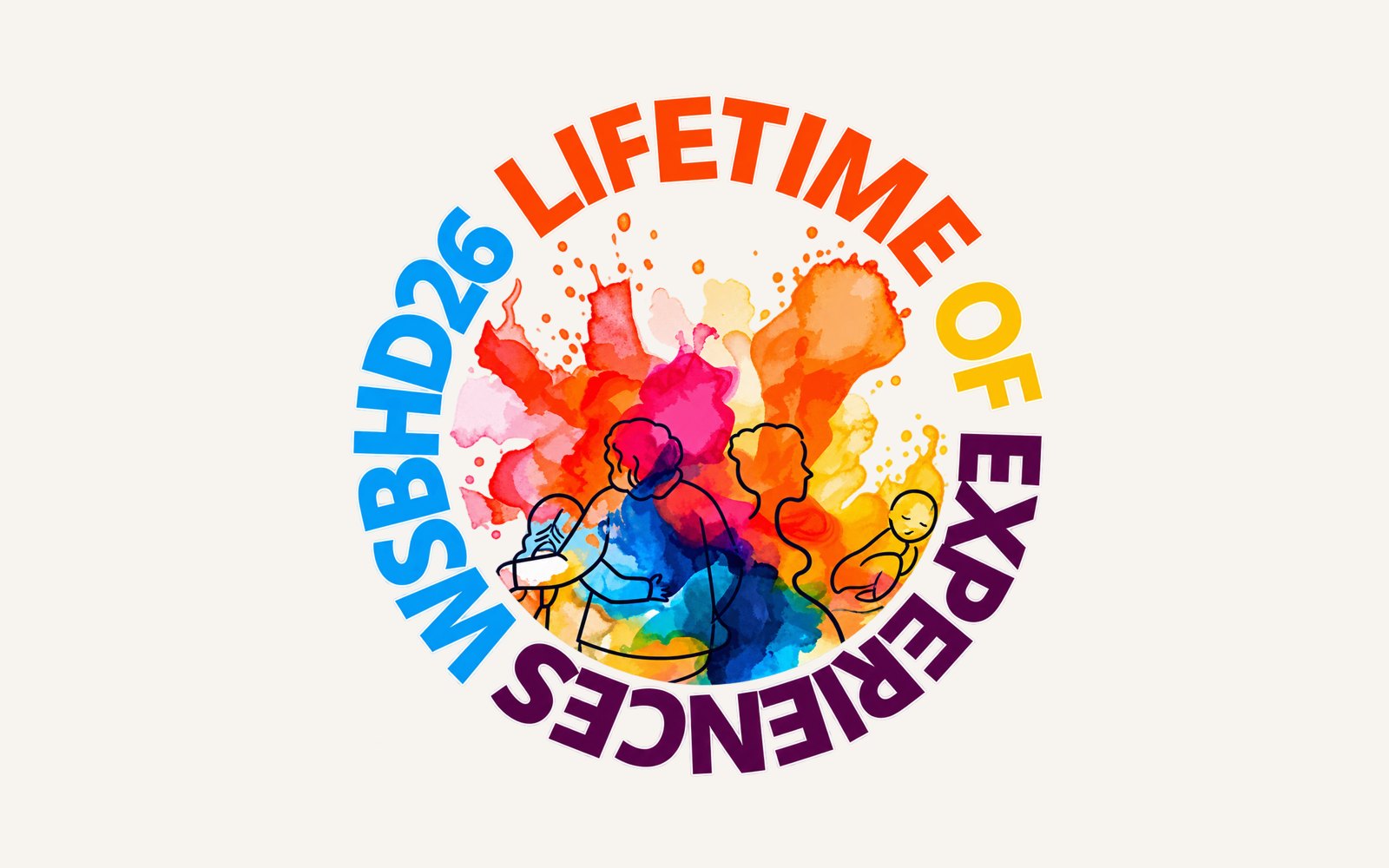
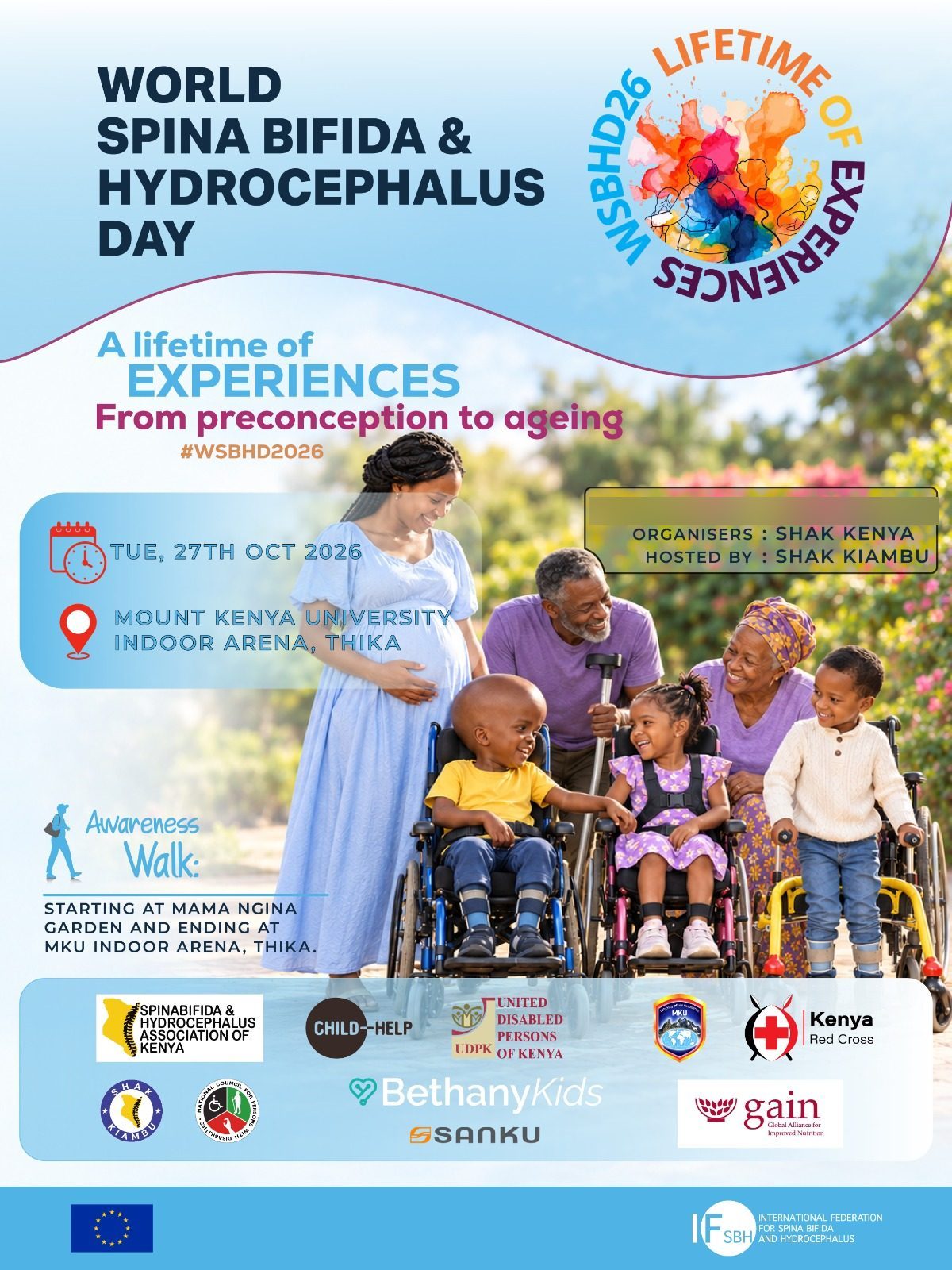
The Spina Bifida and Hydrocephalus Association of Kenya (SHAK Kenya) marks World Spina Bifida and Hydrocephalus Day on Tuesday 27 October 2026, with the celebrations hosted by its Kiambu chapter, SHAK Kiambu, in Thika.
The global day falls on 25 October each year. It was started by the International Federation for Spina Bifida and Hydrocephalus to raise awareness, push for better care and services, and bring families, persons living with the conditions and their allies together. This year's theme is:
"A lifetime of experiences: from preconception to ageing."
What spina bifida and hydrocephalus are
Spina bifida happens very early in pregnancy, when the spine and spinal cord do not form fully. It can affect movement, sensation and bladder and bowel function, in different ways for different people.
Hydrocephalus is a build up of fluid in the brain. It can happen on its own or alongside spina bifida, and is often managed with surgery, such as a shunt that drains the extra fluid.
Neither one defines a person. With timely treatment, good care, accessible schools and workplaces, and support for families, children with spina bifida and hydrocephalus grow into adults who study, work, lead and raise families of their own.
A lifetime, not a moment
This year's theme asks the world to look at the whole of life, not only the first months in hospital.
- Before birth. Folic acid before and in early pregnancy lowers the risk of spina bifida. That is why food fortification partners such as Sanku and the Global Alliance for Improved Nutrition (GAIN) are part of the day: adding folic acid to everyday flour reaches families who may never take a supplement.
- Childhood. Early surgery, follow up care, assistive devices and continence support make the difference between a child who struggles and a child who thrives. So does a school that is ready to welcome them.
- Adulthood. Work, independence, relationships and a voice in decisions. Adults with spina bifida and hydrocephalus are often left out of a conversation that focuses on children.
- Ageing. People with spina bifida and hydrocephalus are living longer, and health and social services need to be ready for them in later life too.
Why it matters in Kenya
Families often carry the cost of surgery, shunt revisions, catheters and mobility aids on their own, and many travel long distances for specialist care. Organisations of persons with disabilities and parents, like SHAK and its county chapters, give families a place to find information, support and each other, and push for services closer to home.
The Persons with Disabilities Act, 2025 commits the government to accessible health care, education and work for persons with disabilities. Days like this one are a chance to ask how that promise is reaching people living with spina bifida and hydrocephalus, at every stage of life. Follow the Act on our tracker.
The day at a glance
- When: Tuesday 27 October 2026
- Where: Mount Kenya University (MKU) Indoor Arena, Thika
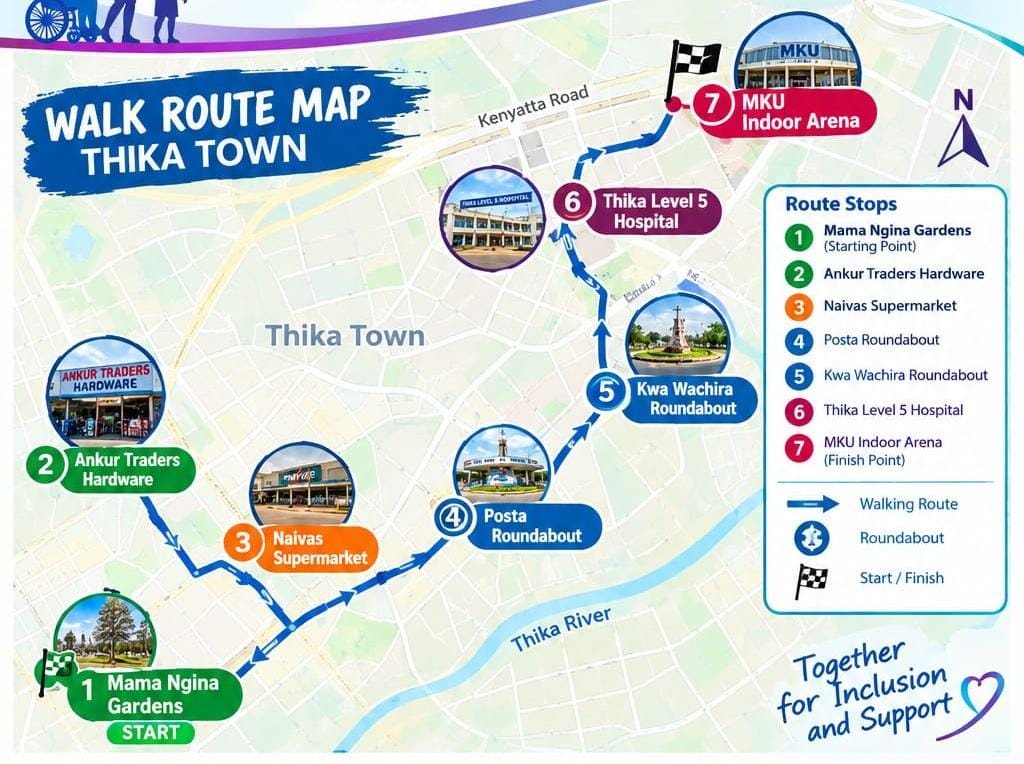
- Awareness walk: from Mama Ngina Gardens to the MKU Indoor Arena
- Organised by: SHAK Kenya, hosted by SHAK Kiambu
The awareness walk
The walk starts at Mama Ngina Gardens and passes through Thika town to the MKU Indoor Arena:
- Mama Ngina Gardens (start)
- Ankur Traders Hardware
- Naivas Supermarket
- Posta Roundabout
- Kwa Wachira Roundabout
- Thika Level 5 Hospital
- MKU Indoor Arena (finish)
Partners
The day is supported by Child Help, the United Disabled Persons of Kenya (UDPK), Mount Kenya University, the Kenya Red Cross, the National Council for Persons with Disabilities, BethanyKids, Sanku, GAIN, the European Union and the International Federation for Spina Bifida and Hydrocephalus.
Will you be in Thika on 27 October? Join the walk, and share your photos and stories with us. Submit your story.
Leave a comment