
 Open the Include360 app
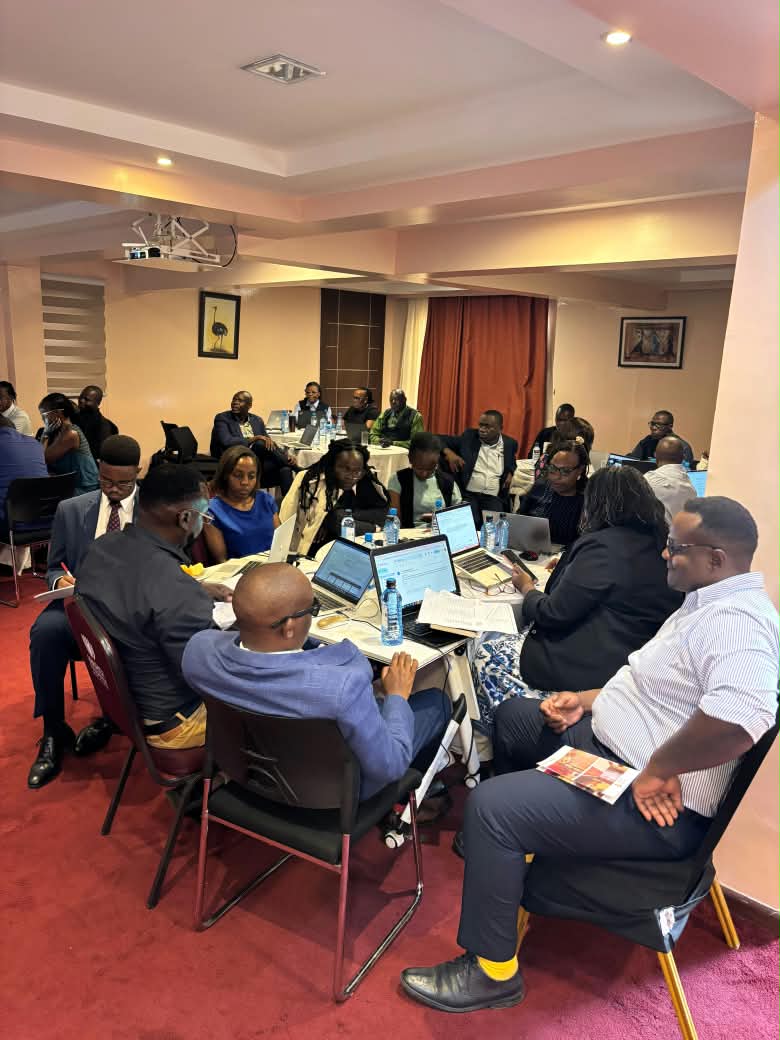

A central question dominated discussions at the Waridi Paradise Hotel in Nairobi on Tuesday,10th November, during a key one-day validation workshop: how are commitments being turned into action? The workshop brought together key actors in the disability advocacy space as part of ongoing national efforts to strengthen accountability and track progress for disability inclusion.
The one-day event was jointly organized by the State Department for Social Protection, under the Ministry of Labour and Social Protection, in partnership with the United Disabled Persons of Kenya (UDPK). Stakeholders gathered to review and validate the newly developed Monitoring and Advocacy Toolkits for the Global Disability Summit (GDS) Commitments.
Tracking Progress from Global Stage to National Action
Kenya’s leadership in global disability rights traces back to 2018, when the country co-hosted the inaugural Global Disability Summit in London alongside the United Kingdom government and the International Disability Alliance. That landmark gathering generated 968 commitments from 171 governments and organizations worldwide, placing Kenya at the center of the global inclusion movement.
To ensure these pledges result in tangible change on the ground, the newly developed toolkits establish a structured operational framework. They are designed to equip advocates and policymakers to track progress, pinpoint systemic gaps, gather reliable evidence, and push for the complete fulfillment of Kenya’s promises.
Comprehensive Review of the Eight Toolkit Chapters
During the workshop, delegates divided into four dedicated thematic working groups to thoroughly examine and refine the eight core chapters comprising the draft toolkit. The review systematically addressed key pillars of social and political development: Chapter 1 focused on Finance and Budgeting, Chapter 2 on Accessible Infrastructure, Chapter 3 on Community Support and Care Services, Chapter 4 on Humanitarian and Climate Action, Chapter 5 on Inclusive Education and Training, Chapter 6 on Health Equity, Chapter 7 on Inclusive Employment and Decent Work, and Chapter 8 covered Political Participation.
Insights from Key Voices at the Workshop
Throughout the plenary discussions and working sessions, speakers stressed that policy goals must lead to real-world accountability and structural reforms:
Opening the workshop, John Wambugu highlighted Kenya's long-standing journey since co-hosting the 2018 summit, emphasizing that the toolkit acts as a clear roadmap to guide stakeholders in tracking progress across national commitments.
Reinforcing this perspective, Dr. Kabue stressed the critical transition from policy design to practical execution:
"Commitments need not just to be on paper; they need follow-up. We are on an advocacy journey, and this advocacy toolkit is vital to ensuring government promises in finance, healthcare, employment, education, and political participation are actually delivered."
Delivering remarks on behalf of Dr. Richard Bosire, Director for Social Development, Madam Mwangangi Rose commended UDPK for its partnership, emphasizing that the goal of the workshop was to thoroughly evaluate all eight chapters of the toolkit to guarantee robust monitoring standards across government programs.
Enforcing Inclusivity in Education, Media, and Politics
Deliberations surrounding inclusive education and political participation brought critical systemic challenges to the forefront. Saitoti, an official representing the County Government of Kiambu, emphasized that effective advocacy requires active collaboration with news outlets to educate journalists on disability rights, while stressing that tailored civic education for Persons with Disabilities (PWDs) remains a fundamental obligation of the state.
Addressing electoral reforms, he cautioned against tokenism, pointing out that current legal frameworks like the Elections Act do not adequately address disability rights. He called for strict enforcement mechanisms to ensure PWDs have genuine representation, arguing that government frameworks must guarantee PWDs a seat at the decision-making table by ensuring political party leadership structures actively accommodate them
Comments
No comments yet. Be the first to say something.