
 Open the Include360 app
Today Kenya marks its 63rd Mashujaa Day, and the national celebrations are in Eldoret. The names read from the podium will be familiar ones. This piece is about a name that should be just as familiar.
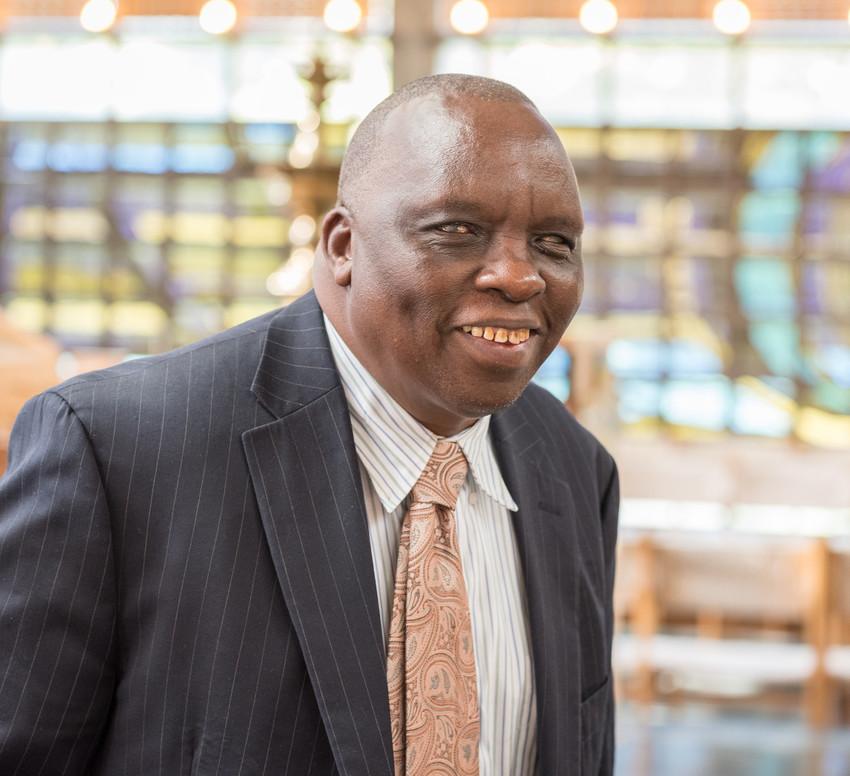
Dr Samuel Njuguna Kabue (pictured top) grew up in a village in colonial Kenya. He lost his sight at 16, soon after starting secondary school, and moved quickly to a school for the blind, where he did well. He went on to the University of Nairobi to study education and became a government teacher, after two attempts to train in theology stalled because his church would not put its name behind him.
The door that opened next changed things for all of us. In 1989 a World Council of Churches scholarship took him to England to study special needs education. In 1990 he joined the National Council of Churches of Kenya to set up its disability programme, and he went on to lead its whole advocacy unit, with more than 60 staff.
The laws we stand on
Dr Kabue played a pivotal role in developing Kenya's National Disability Policy and the Persons with Disabilities Act 2003. He was also Kenya's delegate to the UN Ad Hoc Committee that produced the Convention on the Rights of Persons with Disabilities. Every time one of us cites the Convention in a meeting, we are standing on ground he helped lay.
At home, he has chaired the United Disabled Persons of Kenya, and he still works with it today. After the World Council of Churches Assembly in Harare in 1998, he helped found the Ecumenical Disability Advocates Network and coordinated it. From 2003 he led it full time, taking the disability conversation into churches around the world.
In 2015, Parliament approved his appointment as a Commissioner of the Kenya National Commission on Human Rights. He was awarded the Head of State Commendation in 2006 and the NCCK National Ecumenical Leadership and Service Award in 2007. Today he chairs the board of the Refugee Consortium of Kenya.
A chance, not a miracle
Dr Kabue tells his own story in his memoir, From the Village to the World. Its message is simple. "I am what I am because people gave me a chance to prove myself," he told the World Council of Churches.
That is the right way to see him today. He is not a hero because he is blind. He is a hero because the rights in the 2003 Act, the Convention and the 2025 Act that followed them were fought for, drafted and defended by people like him, persons with disabilities working in the rooms where the decisions were made.
Mashujaa Day honours everyone who built this country. Dr Kabue built a large part of the country we live in.
Name your shujaa
Who in your community deserves to be named alongside him? Tell us in the comments below. To keep the work going, follow the bills still before Parliament on our bill tracker.
Photo: Albin Hillert/WCC. This piece draws on Dr Kabue's 2016 interview with the World Council of Churches, the Refugee Consortium of Kenya and the records of the Parliament of Kenya.
Leave a comment